Showing posts with label Science. Show all posts

Toyota Hydrogen Buses 100% Fuel Cell Can Work As Emergency Generators

It's preparing a 100-strong fleet ahead of the 2020 Tokyo games.

Toyota will start selling fuel cell (FC) buses in 2017, with the aim of selling up to 100 in the Tokyo area ahead of the 2020 Olympic games. The company is using a beefed up version of the fuel system it developed for the Toyota Murai, with 10 high pressure tanks holding 600 liters of highly compressed H2. That gives it 235 kWh or power, about three times that of a Tesla Model S, meaning it "can be

used as a power source in the event of disasters," the company said in a press release.
Toyota has been working on CO2-free fuel-cell buses for a while now with its Hino bus and truck division. The company is bullish on hydrogen fuel cell vehicles, even though they're less efficient than EVs if the hydrogen is generated using water and electricity. Hydrogen made by reforming methane creates CO2 pollution, though less overall than if gasoline- or diesel-powered vehicles are used. That's assuming the methane, a potent greenhouse gas, doesn't leak -- and it often does.
JAPAN-TOSHIBA/
Toru Hanai/Reuters
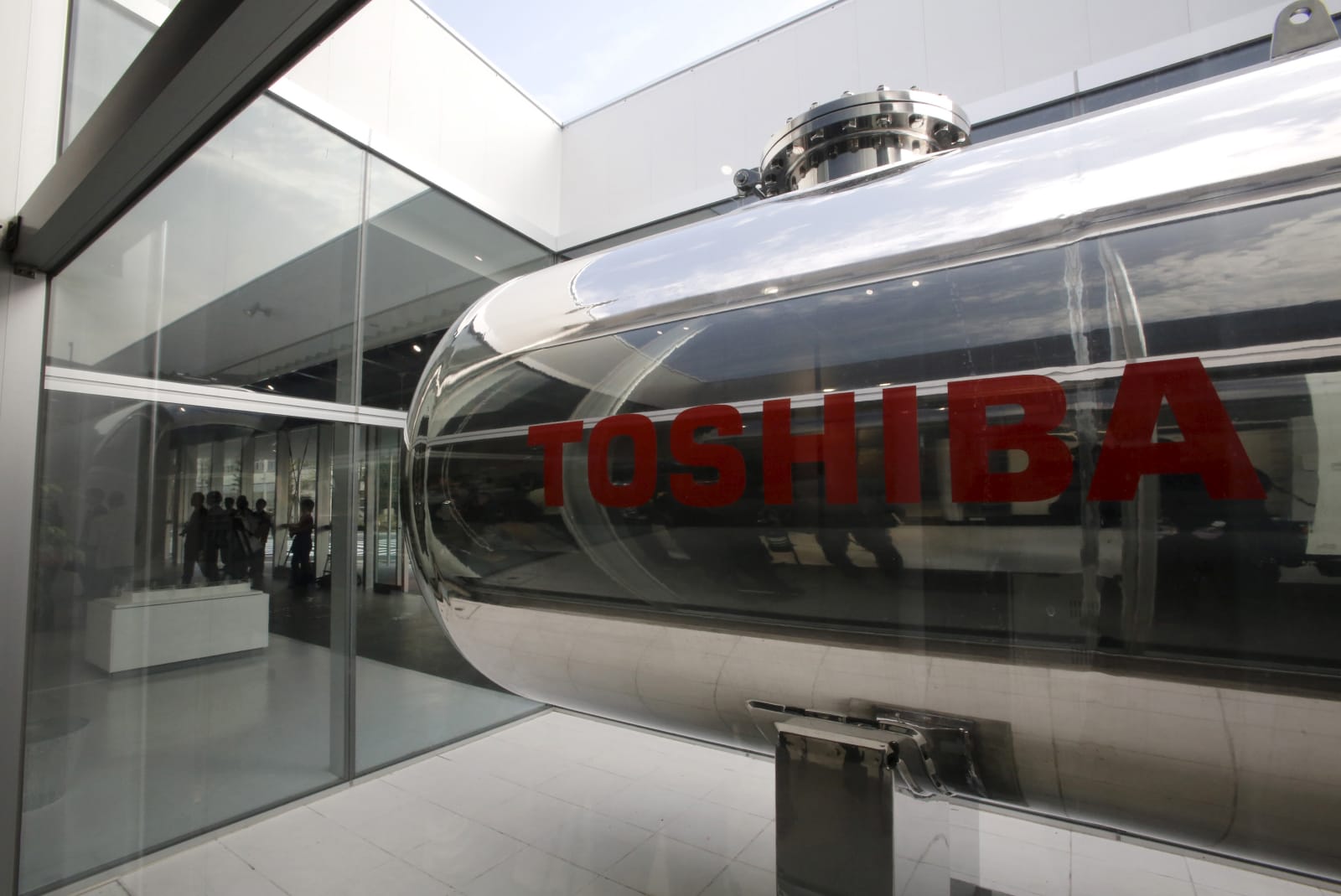
Toshiba recently unveiled Japan's largest water electrolysis hydrogen production plant (above) that uses power from the electrical grid. Unfortunately the nation still gets most of its electricity from fossil fuels, not renewable or nuclear energy. And the bulk of hydrogen is still produced by methane reforming, a polluting process made worse by the fact that Japan imports its methane.

However, the nation plans to produce more hydrogen by electrolysis over the next decade as part of Prime Minister Shinzo Abe's push to a hydrogen future. For more on fuel cells and hydrogen vehicles, check Engadget's explainer.


Source: Toyota


Read More »

Twitter, Spotify and Reddit, and a Huge Number of Other Big Website Reportedely Down This Morning

This Is Why Half the Internet Shut Down Today

Twitter, Spotify and Reddit, and a huge swath of other websites were down or screwed up this morning. This was happening as hackers unleashed a large distributed denial of service (DDoS) attack on the servers of Dyn, a major DNS host. It’s probably safe to assume that the two situations are related.

Update 4:22 PM EST: Looks like this is probably going to get even worse before it gets any better. Dyn says they are being hit with a third wave of attacks. Dyn told CNBC the attack is “well planned and executed, coming from tens of millions IP addresses at same time.”

Update 12:28 PM EST: Dyn says it is investigating yet another attack, causing the same massive outages experienced this morning. Based on emails from Gizmodo readers, this new wave of attacks seems to be affecting the West Coast of the United States and Europe. It’s so far unclear how the two attacks are related, but the outages are very similar.

In order to understand how one DDoS attack could take out so many websites, you have to understand how Domain Name Servers (DNS) work. Basically, they act as the Internet’s phone book and facilitate your request to go to a certain webpage and make sure you are taken to the right place. If the DNS provider that handles requests for Twitter is down, well, good luck getting to Twitter. Some websites are coming back for some users, but it doesn’t look like the problem is fully resolved.

Dyn posted this update on its website: “Starting at 11:10 UTC on October 21th-Friday 2016 we began monitoring and mitigating a DDoS attack against our Dyn Managed DNS infrastructure. Some customers may experience increased DNS query latency and delayed zone propagation during this time. Updates will be posted as information becomes available.”

Here’s a list of websites that readers have told us they are having trouble accessing:
  • ActBlue
  • Basecamp
  • Big cartel
  • Box
  • Business Insider
  • CNN
  • Cleveland.com
  • Etsy
  • Github
  • Grubhub
  • Guardian.co.uk
  • HBO Now
  • Iheart.com (iHeartRadio)
  • Imgur
  • Intercom
  • Intercom.com
  • Okta
  • PayPal
  • People.com
  • Pinterest
  • Playstation Network
  • Recode
  • Reddit
  • Seamless
  • Spotify
  • Squarespace Customer Sites
  • Starbucks rewards/gift cards
  • Storify.com
  • The Verge
  • Twillo
  • Twitter
  • Urbandictionary.com (lol)
  • Weebly
  • Wired.com
  • Wix Customer Sites
  • Yammer
  • Yelp
  • Zendesk.com
  • Zoho CRM
  • Credit Karma
  • Eventbrite
  • Netflix
  • NHL.com
  • Fox News
  • Disqus
  • Shopify
  • Soundcloud
  • Atom.io
  • Ancersty.com
  • ConstantContact
  • Indeed.com
  • New York Times
  • Weather.com
  • WSJ.com
  • time.com
  • xbox.com
  • dailynews.com
  • Wikia
  • donorschoose.org
  • Wufoo.com
  • Genonebiology.com
  • BBC
  • Elder Scrolls Online
  • Eve Online
  • PagerDuty
  • Kayak
  • youneedabudget.com
  • Speed Test
  • Freshbooks
  • Braintree
  • Blue Host
  • Qualtrics
  • SBNation
  • Salsify.com
  • Zillow.com
  • nimbleschedule.com
  • Vox.com
  • Livestream.com
  • IndieGoGo
  • Fortune
  • CNBC.com
  • FT.com
  • Survey Monkey
  • Paragon Game
  • Runescape


Here’s an internet outage map from DownDetector as of 12:46 PM EST:


Here’s an internet outage map from DownDetector as of 12:46 PM EST:


At the time of publication Dyn said that it was still dealing with the problem
.

Update 9:05 AM EST: Judging by emails from readers, this problem seems to be getting worse. 

 Update 9:43 AM EST: Dyn says the issue has been resolved.

Update 12:19 PM EST: Dyn says the issue is resolved, but multiple readers are messaging me to say they’re still having trouble accessing websites. 

Update 12:25pm EST: It’s happening again. (see above)


By: William Turton Staff Writer, Gizmodo  


Read More »

The Indian Government Set to Adopt 5G Technology

The Indian government seems set to adopt 5G technology alongside other developed markets, given its focus on programs like Digital India. The government has commissioned a research team on 5G technology, which has already filed 100 patents so far — of which around 10 have already been granted, according to the Economic Times.


The research project, which was commissioned by the ministry of electronics and IT, was approved in September 2015 with an outlay of Rs. 36.51crore over a period of three years. Most of these patents have been filed by the team simultaneously in the US and in India.

The Indian telecom market has historically been playing catchup game with the rest of the world in the adoption of 2G, 3G and 4G technologies. Although 5G standards are planned to be completed for first 5G commercial deployment in 2020, many operators in the US, Korea and Japan are preparing to pilot or trial 5G in 2016 and commercially launch the first 5G solutions from 2017 onwards.

5G is the fifth generation of wireless networks which are expected to offer not just more speed for end users and also have the capacity to connect the billions of devices like driver less cars and household appliances which will connect to the internet in the near future.

“We are scaling up fast and switching gears because 5G is just around the corner,” Kiran Kuchi, a professor at the department of electrical engineering at the Indian Institute of Technology (IIT), Hyderabad was quoted as saying.

He said that the research team expects to file a lot more patents in the next few years.
Apart from the government, private stakeholders like Reliance Jio, Tata Teleservices and Tejas Networks, along with a host of startups are partnering in the effort by lending their manpower and equipment. A person familiar with government’s plans said that India is aggressively pursuing the agenda at the body which is making standards for 5G of which India has been made a member only two years ago.


“World over governments in China, UK, and others are pumping money in 5G and we can’t miss the boat,” an official was quoted as saying.

An earlier ET report said that telecom gear makers Ericsson and Nokia began talks with Indian telcos and policy makers for possible engagements around fifth-generation (5G) technology. The initial talks revolve around the telcos’ interest and their preparedness for the 5G technology, besides identification of relevant spectrum band that will support the technology.


Read More »

New Excellent Video Mapping Technology That Will Blow Your Mind

If you’ve ever seen an example of projection mapping or video mapping before, prepare to have your mind blown by the latest advancement in this technology.


 For those out of the loop, it refers to projecting an image onto a surface – be it a sheet of fabric or the side of a building – while having it conform to the shape of your target. It’s a way harder to achieve when the object isn’t stationary and can be moved in 

If you’ve ever seen an example of projection mapping or video mapping before, prepare to have your mind blown by the latest advancement in this technology.

Tokyo University’s Ishikawa Watanabe Laboratory has combined two new techniques to make projection mapping on deforming surfaces (such as a stretchable t-shirt or a flag waving in the wind) possible. Its DynaFlash projector, developed in-house can to project 8-bit images at rates of up to 1,000 frames per second with a delay of only 3 milliseconds. By combining this with a high-speed non-rigid surface tracker that runs at the same framerate, the human eye isn’t able to spot any kind of misalignment in the projection.

By marking a deformable surface like a piece of textile or paper with infrared ink, the tracker can follow its movements and accurately project the images on it.
It looks pretty cool, but it’s still unclear what the technology could actually be used for. It’s clearly fit for usage on clothing, even though you’ll need a projector for the effect to work. Additionally, the researchers behind the project note that it could be used for flexible user interfaces projected on deforming surfaces.
Read More »

European Space Agency’s Schiaparelli ExoMars Landing Did Not Go as Planned


The European Space Agency’s Schiaparelli lander did not touch down on Mars as planned yesterday. During a press briefing this morning, ExoMars mission scientists confirmed that the lander’s signal cut out about 50 seconds before landing, and that something went wrong in the final steps, right around when the parachute was jettisoned. ESA is still analyzing data collected by satellites and telescopes to get the full story.

ExoMars, an ESA and Roscosmos-led mission to search for signs of geologic and biological activity on the Red Planet, arrived at Mars yesterday after a seven-month journey. The mission’s scientific workhorse, the Trace Gas Orbiter, performed its orbital insertion maneuver beautifully, becoming the second ESA satellite to circle the Red Planet. 

The Schiaparelli Entry, Descent, and Landing Module (also called the EDM) did not fare so well. Its task yesterday was to arrive at the surface in one piece, by performing an automated landing sequence that included ballistic entry, heat shield release, parachute deployment, and finally, a 30 second firing of its retro-thrusters shortly before touchdown. 

Prior to entering the Martian atmosphere, the Giant Metrewave Radio Telescope (GMRT) in India began receiving a signal from Schiaparelli, but as ESA told us yesterday, that signal was lost “some time prior to landing.” A small fleet of Mars-orbiting satellites, including ESA’s Mars Express, NASA’s MAVEN probe and Mars Reconnaissance Orbiter, and the newly-arrived TGO, have been mobilized to search for the lander.

Telemetry data collected by TGO and downlinked this morning will be key to getting the full story on Schiaparelli, which seems to have successfully entered the Martian atmosphere, released its heat shield, deployed its parachute, and decelerated from 13,000 mph (21,000 kph) to 155 mph (250 kph).

About a kilometer above the surface, when the parachute and back heat shield were set to release and retro-thrusters should have started firing, the lander ran into trouble. “This ejection itself appears to have occurred earlier than expected, but analysis is not yet complete,” ESA said in a statement. What’s more, it appears the thrusters fired for just a few seconds, instead of the intended 30. About 50 seconds before landing, Schiaparelli’s transmission went dead.

As disappointing as it is to hear that the landing didn’t go off perfectly, it’s worth emphasizing that Schiaparelli was ESA’s dry run. The entire purpose of the lander was to demonstrate technology that will be used to bring a larger, mobile rover to the surface of Mars in 2020—and that demonstration included rooting out any design or operational flaws. 

Once ESA figures out exactly what went wrong, it’ll get to work making sure the same mistakes aren’t repeated. In the meanwhile, we now have another scientific orbiter around Mars.


Read More »

All Tesla cars built from today on have all hardware needed for full self-driving


 Elon Musk revealed the Model 3 in March, revealing details of the $35,000 base model including a sub-six second 0-60 time and a minimum 215 mile range. The basic picture of the Model 3 inspired a pre-order frenzy unlike anything seen previously in the car world, but now Musk has dropped what he referred to earlier as Part 2 of the Model 3 unveiling after a lengthy pause, as promised, and it’s a doozy.

Musk announced that all Tesla cars being produced as of today, including the Model 3, will have everything they need onboard to achieve full Level 5 self-driving in the future. The news means that every Tesla vehicle, including the Model S and X as well as Model 3 cars made after today will eventually be able to achieve full autonomous driving, with what Tesla refers to as “a safety level substantially greater than that of a human driver” via nothing more than a software update at some point in the future.

The hardware required to make this possible includes a sensor loadout complete with eight surround optical cameras, which can see up to 250 meters out from the vehicle on all sides, and a dozen ultrasonic sensors to assist the optical system. These are capable of twice the range of previous hardware, and can detect both “hard and soft objects” according to the company. Also included is the radar hardware that provides forward-facing detection of hazards even through potentially obfuscating conditions.

The biggest change might be the new onboard computer that provides over 40 times the processing power of the existing Tesla hardware, which actually runs the in-house neural net the car maker has developed in order to handle processing of data inbound from the vision, sonar and radar systems. Musk said on call discussing the most recent update to the existing driver assistance Autopilot software that it basically stretched computing power to the limit, which is why the upgraded CPU is required for full Level 5 autonomy. The new GPU is the Nvidia Titan, Musk said on the call, though it was a “tight call” between Nvidia and AMD.

The validation required for full autonomy will still take some more time, but Musk said on a call that it’s actually already looking like it’ll be at least two times as safe as human driving based on existing testing.

While it’s being developed, the self-driving system will operate in the background in “shadow mode,” essentially working virtually behind the scenes in order to demonstrate where it would’ve been able to avoid accidents that a person driving could not.

While the hardware will be included in all Tesla cars made from now on, which includes the Model 3, it will be an $8,000 add-on for vehicles to enable the software.

The reason for building in full autonomy capability across the lineup, according to Musk, is entirely to increase driving safety and reduce traffic-related accidents. Musk spoke passionately about this aim going so far as to admonish broad media coverage of Autopilot-related accidents, while the ongoing and persistent issue of human-fault car deaths receives far less attention from press.

In fact, the National Highway Traffic Safety Administration reported sharp increases in traffic deaths in both 2015 and 2016, and asked for help parsing the data to determine the causes of the rise. And when the Department of Transportation released its federal guidelines for autonomous driving technology, it also strongly indicated that the government believes autonomy in vehicles will ultimately lead to safer roads.

Musk said in a conference call in August regarding Tesla’s advancements in creating a car with Level 4 autonomous capability that “what we’ve got will blow people’s minds, it blows my mind,” and added that “it’ll come sooner than people think.” He’s certainly delivered with today’s announcement.


Read More »

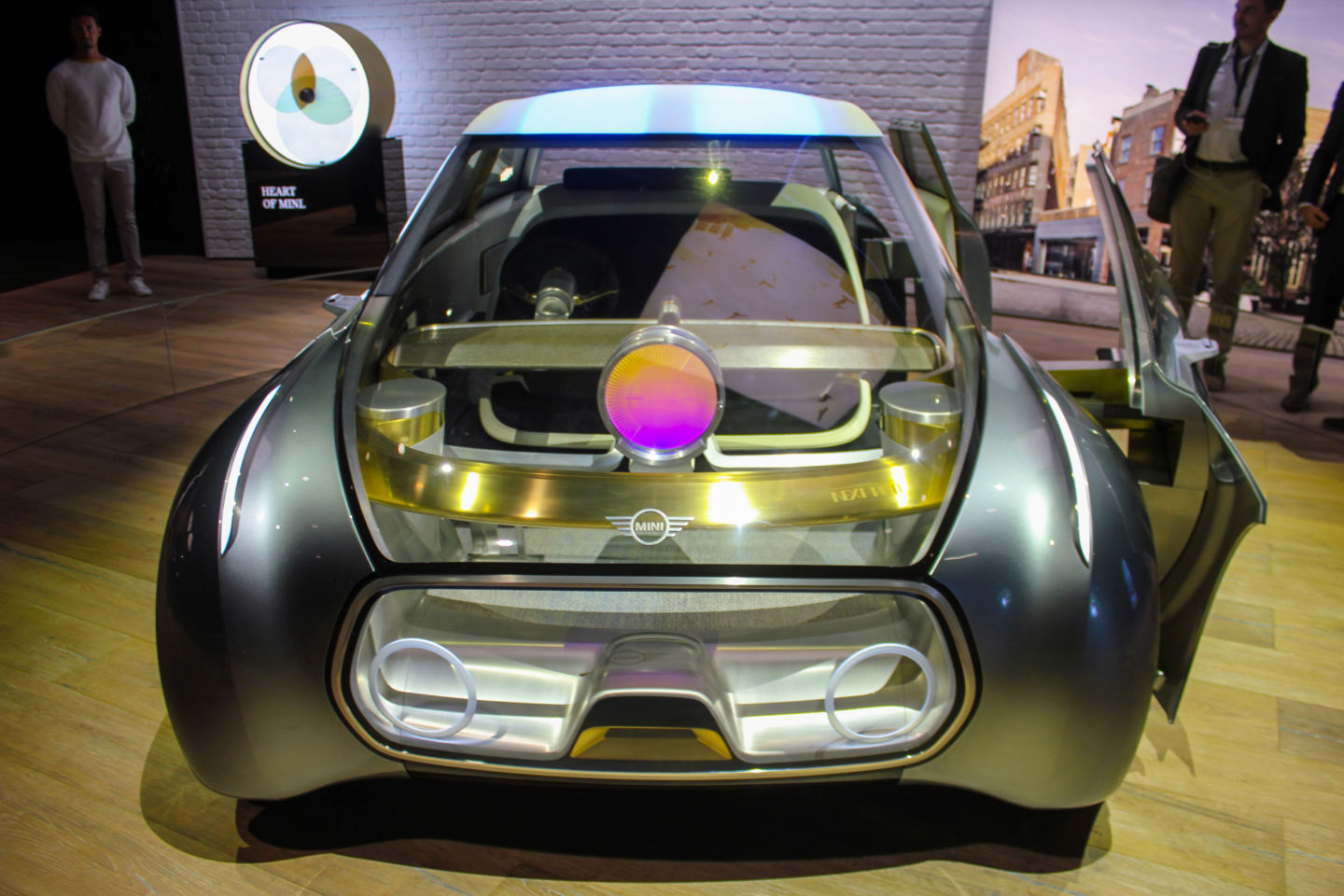
Latest In The World Of Car Technology Is BMW VISION NEXT 100

Where does BMW see its four brands in a future where the cars drive themselves? 


SANTA MONICA, Calif.—On Tuesday, BMW showed off its four new concept cars under one roof together for the first time. These cars included not only the new BMW Motorrad Vision Next 100, but also a new futuristic Rolls-Royce, Mini Cooper, and BMW. Each shows us that marque's view of its place in a world where our vehicles are intelligent and drive themselves, which some see as an existential threat to companies, like BMW, that have made their reputations by focusing on driver engagement.

The star of the show, which took place in the Santa Monica Airport's Barker Hanger, was BMW's new motorcycle, which combines previous models revealed in Munich, London, and Beijing. The concepts also build on ideas that BMW showed us at CES in January, notably the triangle-based UI for the BMW VISION NEXT 100, as well as the way its seats move and cant together when in self-driving mode.


After some experiments with augmented reality, BMW's chief designer, Adrian van Hooydonk, thinks those full-screen heads-up displays some of us have been dreaming about will actually make it into our cars before too long.

"Today we already have a heads-up display in most of our BMWs. It's projected onto the windscreen, but you experience it like it's augmented reality. But we're working on technology that can improve the display area, making it larger, and eventually we envision that the whole windscreen will become a projection area," he told Ars. An exact timeline is dependent on the company's suppliers, but van Hooydonk thought that "within one to two vehicle generations the system will be ready for production."


The collection of BMW VISION NEXT 100 concepts is on display at the Barker Hangar in Santa Monica, California, and is free and open to the public until October 16.
Listing image by Cyrus Farivar


 Source

Read More »

Success: New Technology Being Developed To Create Energy From Living Plants


Here's another development worthy of applause: A Dutch start-up has developed a way to use living plants as a continuous source of clean energy - all that is needed is a light source, carbon dioxide, water, and a field or patch of plants. 

The company is called Plant-e, and it is showing the world how easy it can be to bring electricity to isolated regions currently without power. As shared in the video below, the system works best in wetlands or watery fields like rice paddies. Also, it doesn't matter if the water is brackish or polluted.

 This means that areas unsuitable for growing crops could be repurposed as a power source. How does it work? Based on natural processes, electrons are harvested from the soil and electricity is produced while plants continue to grow! It might sound too good to be true, but it absolutely is not. As Next Nature shares, the theory behind the Plant-e system is simple. 


When a plant creates food using photosynthesis, a large portion of the organic matter generated is actually excreted by the roots into the soil. That same organic matter then gets consumed by microorganisms living in the soil , which release electrons as a byproduct of this consumption. By placing an electrode near the roots, it then becomes easy to harvest this waste energy and turn it into electricity.

 In addition, the plants are left unharmed during the entire process. In fact, tests show that the plants will continue to grow normally in the presence of electrodes, providing a constant source of power day and night. Combined with lamps powered by salt water, off-grid locations may have access to sustainable energy sooner than predicted! At present, a prototype green roof utilizing this technology is already being developed and tested in the Netherlands. If all goes well, the Plant-e team hopes to utilize this system to harvest a significant amount of energy - maybe even enough to power a house. At present, they have been able to use the technology to generate enough energy to power a cell phone - but time will no doubt allow the company to perfect its process. The amount of renewable energy sources being developed is astonishing; perhaps very soon in the near future technologies like solar and wind power may be merged with a system like this, completely eliminating humanity's dependence on fossil fuels ( via naturalblaze.com ).
Here's another development worthy of applause: A Dutch start-up has developed a way to use living plants as a continuous source of clean energy - all that is needed is a light source, carbon dioxide, water, and a field or patch of plants. READ MORE: http://www.disclose.tv/news/breakthrough_new_technology_being_developed_to_create_energy_from_living_plants/121357
Read More »

Li-Fi is 100 Times Better and Faster Than Wi-Fi

Expect to hear a whole lot more about Li-Fi - a wireless technology that transmits high-speed data using visible light communication (VLC) - in the coming months. With scientists achieving speeds of 224 gigabits per second in the lab using Li-Fi earlier this year, the potential for this technology to change everything about the way we use the Internet is huge.

And now, scientists have taken Li-Fi out of the lab for the first time, trialling it in offices and industrial environments in Tallinn, Estonia, reporting that they can achieve data transmission at 1 GB per second - that's 100 times faster than current average Wi-Fi speeds.

"We are doing a few pilot projects within different industries where we can utilise the VLC (visible light communication) technology," Deepak Solanki, CEO of Estonian tech company, Velmenni, told IBTimes UK. 
"Currently we have designed a smart lighting solution for an industrial environment where the data communication is done through light. We are also doing a pilot project with a private client where we are setting up a Li-Fi network to access the Internet in their office space.”

Li-Fi was invented by Harald Haas from the University of Edinburgh, Scotland back in 2011, when he demonstrated for the first time that by flickering the light from a single LED, he could transmit far more data than a cellular tower. Think back to that lab-based record of 224 gigabits per second - that's 18 movies of 1.5 GB each being downloaded every single second.

The technology uses Visible Light Communication (VLC), a medium that uses visible light between 400 and 800 terahertz (THz). It works basically like an incredibly advanced form of Morse code - just like switching a torch on and off according to a certain pattern can relay a secret message, flicking an LED on and off at extreme speeds can be used to write and transmit things in binary code. 

And while you might be worried about how all that flickering in an office environment would drive you crazy, don’t worry - we’re talking LEDs that can be switched on and off at speeds imperceptible to the naked eye. 


how Li-Fi Technology works


The benefits of Li-Fi over Wi-Fi, other than potentially much faster speeds, is that because light cannot pass through walls, it makes it a whole lot more secure, and as Anthony Cuthbertson points out at IBTimes UK, this also means there's less interference between devices.

While Cuthbertson says Li-Fi will probably not completely replace Wi-Fi in the coming decades, the two technologies could be used together to achieve more efficient and secure networks.

Our homes, offices, and industry buildings have already been fitted with infrastructure to provide Wi-Fi, and ripping all of this out to replace it with Li-Fi technology isn’t particularly feasible, so the idea is to retrofit the devices we have right now to work with Li-Fi technology.

Research teams around the world are working on just that. Li-Fi experts reported for the The Conversation last month that Haas and his team have launched PureLiFi, a company that offers a plug-and-play application for secure wireless Internet access with a capacity of 11.5 MB per second, which is comparable to first generation Wi-Fi. And French tech company Oledcomm is in the process of installing its own Li-Fi technology in local hospitals.

If applications like these and the Velmenni trial in Estonia prove successful, we could achieve the dream outlined by Haas in his 2011 TED talk below - everyone gaining access to the Internet via LED light bulbs in their home.

"All we need to do is fit a small microchip to every potential illumination device and this would then combine two basic functionalities: illumination and wireless data transmission," Haas said. "In the future we will not only have 14 billion light bulbs, we may have 14 billion Li-Fis deployed worldwide for a cleaner, greener, and even brighter future."

Read More »

Tips on How to sell your business using a Virtual Data Room


With thousands of businesses being the sold each year, business owners decide to sell their businesses for a variety of reasons, such as the loss of a spouse or a business partner, or because of lack of profitability. Others may decide to only sale a certain division of their business due to the discontinuation of a product line or for other reasons. 

Regardless of why business owners decide to sell their business, a lot of effort must be put into getting the business prepared for the sale.

One of the primary requirements to ensure that this process takes place in a smooth manner is to have the proper data to present to interested parties and / or investors. This information usually consists of historical financial information about your company’s past performance, such as financial statements consisting of profit and loss statements, balance sheets, and statement of cash flows. Other documents include valuations, company history, the highest and poorest performing product lines, banking information, management and ownership information, customer and vendor information, legal documents, contract agreements and other documents that may be requested.

Due diligence is also a major part of this process, whereby the information provided is verified by key parties. 


The Convenience of Using Virtual Data Rooms When Selling a Business 
The use of a virtual data room is a convenient way to manage the merger and acquisition process. It is confidential, secure and user-friendly. The virtual data room costs is very reasonable too, particularly compared the convenience that it provides.

A Virtual Data Room, often referred to as a VDR is somewhat of an online storeroom used to store information and disperse documents. VDR’s also share data and acts as a means to facilitate all aspects of the due diligence process. It also serves as a means to facilitate private equity as well as venture capital related transactions as well.

Previously, physical data rooms were the traditional mode of facilitation, prior to being replaced by the virtual data room. The traditional, physical data rooms previously facilitated the due diligence process to disclose key documents. However, it has been determined that the virtual data rooms are much more convenient, offers high-security, are cost efficient and very effective.

Virtual data rooms are used across a wide variety of industries. So regardless of what type of business you may have, they will be able to accommodate your information. 

They also work as an extra-net to accommodate bidders, along with their advisers, whereby access is provided via the Internet during the due diligence process of a merger and acquisition transaction. The term extranet is basically a website that has limited capabilities and control access. It uses a secure logon process that has been provided by the vendor. And it is the vendor who can also disable this secure logon process at any time.

Since the information contained in virtual data rooms are strictly confidential, restrictions have been securely set. So activities such as copying, printing or forwarding information to others has been restricted. This is possible by using digital rights management designed to provide full protection and security to the data.

The Role Of a Virtual Data Room During the Merger and Acquisition Process
The virtual data room plays a vital role during the merger and acquisition process. It is positioned as one of the core repositories of important data that pertains to selling a business. It houses important company data that is needed for viewers to determine if purchasing the business would be a viable acquisition.

The good thing about using virtual data rooms during the merger and acquisition process is that the information remains confidential as it is maintained in a controlled environment. It only allows key individuals, such as bidders and their members or designated representatives such as attorneys or investment bankers to gain access to the information needed. Because of the state-of-the-art technology that’s associated with operating VDR’s, it has been known to provide such an increase in convenience, that the overall bidding process has been decreased by approximately 30 days compared to the traditional physical data rooms.

Due Diligence Specific Virtual Data Rooms
Using a due diligence specific virtual data allows business owners to provide everything that is needed to all of the parties involved in the business acquisition process. A due diligence checklist is normally made available making the process much more streamlined for everyone involved.

To summarize, the due diligence virtual data room is where you are able to place all of your company’s relevant business information (both historical and the future information of your business,) so that it can be viewed by interested parties in a controlled environment – all in one place – hence simplifying the overall merger and acquisition process. The best part of all is that the virtual data room costs are affordable too.
Read More »

first robotic surgical system with sense of touch invented by Deakin University


Deakin University in Melbourne has unveiled the HeroSurg robot, which gives surgeons, for the first time, the sense of touch while they perform surgery via a computer.

Unveiled on Wednesday at the Australasian Simulation Congress, the university claims HeroSurg to be a major breakthrough compared to current technology, which limits robotic surgery to the sense of sight.

Giving surgeons the added sense of touch through technology known as haptic feedback means laparoscopic or keyhole microsurgery will be safer and more accurate by reducing trauma and lowering the risk of blood loss and infection. 


HeroSurg is the world's first robot that provides surgeons the sense of touch (Deakin University) 

HeroSurg was developed in the laboratory at Deakin's Waurn Ponds campus in Geelong by engineers from Deakin and Harvard, along with professor Suren Krishnan, who in 2008 became the first Australian surgeon to use the da Vinci surgical system for ear, nose, and throat procedures. 

Krishnan, from the Royal Adelaide Hospital and an honorary professor at the Deakin Institute for Intelligent Systems Research and Innovation (IISRI), said HeroSurg's added sense of touch improves the ability of surgeons to distinguish between normal tissue and tissue affected by cancer. 

"The major drawback of the current system is the lack of tactile feedback," Krishnan said in a statement. "Tactile feedback allows a surgeon to differentiate between tissues and to 'feel' delicate tissues weakened by infection or inflammation and dissect them more carefully. Tactile feedback will allow us to use finer and more delicate sutures in microsurgery."

The project's lead researcher and haptics expert, Dr Mohsen Moradi Dalvand, said the haptic feedback allows for specific manoeuvres and diagnoses to be performed with greater confidence.


"HeroSurg's unique features, which allow it to overcome many of the limitations of existing robotic laparoscopic systems, include collision-avoidance capability, modularity, and automatic patient/bed adjustment," Dalvand said in a statement. 


"The automatic collision avoidance enables surgeons to operate with peace of mind and confidence that there will be no collision with instruments, the robot's arms, or the laparoscope with the patient."

Other HeroSurg features include high-resolution 3D images, an increased range of motion for the surgeon, and a more ergonomic workstation console.

HeroSurg workstation console. (Deakin University)

 
"HeroSurg will assist surgeons to perform demanding surgical procedures with comfort, accuracy, and safety by providing real-time collision avoidance for medical instruments, and stereo-endoscopic vision," Dalvand said.

IISRI director Saeid Nahavandi pointed out that HeroSurg could even be used remotely, meaning that surgeons could perform surgery thousands of kilometres away from the patient.

After laboratory testing in partnership with medical experts, the project is ready for human trials. Deakin University plans to bring the technology into the Australian health system over the next few years. 

A study last month by medical journal The Lancet found that robots are just as effective as human surgeons after a trial in the Royal Brisbane and Women's Hospital, which saw 308 men with localised prostate cancer randomly assigned to have either robotic surgery or open surgery.

"Surgery has long been the dominant approach for the treatment of localised prostate cancer, with many clinicians now recommending the robotic method to patients," said lead author Robert Gardiner, University of Queensland Centre for Clinical Research, in a statement. 

"Many clinicians claim the benefits of robotic technology lead to improved quality of life and oncological outcomes."

The patients who received surgery via robotics lost less blood during the procedure, had a shorter stay in the hospital, and reported better physical quality of life six weeks after the surgery.

Physical quality of life 12 weeks after the operation was similar between those operated on by humans and those by robots, with the long-term outcome yet to be reported.

Read More »

Battery with the ability to last forever Accidentally invented.

Researchers Accidentally Invent A Battery that Lasts Forever

Accidents’ happening in labs is not a good thing. But, what if that accident yields an unexpected result leading researchers to a system that could make batteries last up to 400 times longer than the best-performing batteries today?

Researchers from the University of California, Irvine have accidentally made a battery that can last up to 200,000 cycles of recharging and can last up to 400 times longer. This discovery could bring us closer to batteries that can be charged thousands of times, without the need for any replacement.

The original idea of the research was to create a solid-state battery by replacing the common liquid in the lithium batteries with a much thicker electrolyte gel, according to their study published in the journal ACS Energy Letters. They also substituted the lithium in the batteries with gold nanowires for electric storage.
“We started to cycle the devices, and then realized that they weren’t going to die,” said Reginald Penner, a lead author of the paper. “We don’t understand the mechanism of that yet.”
The Irvine battery technology uses a gold nanowire, no thicker than a bacterium, coated in manganese oxide and then protected by a layer of electrolyte gel. The gel interacts with the metal oxide coating to avoid corrosion. The longer the wire, the more surface area, and the more charge it can hold.
“[The gel] does more than just hold the wire together. It actually seems to make the metal oxide softer and more fracture-resistant. It increases the fracture toughness of this metal oxide that is doing the charge storage,” Penner said.

The UCI nanobattery was tried out in test conditions over a three month period, producing a “94-96% average Coulombic efficiency,” according to the researchers. No loss of capacity or power and fracturing of any nanowires was recorded by the test.

UCI doctoral candidate Mya Le Thai was the one who made the accidental invention a reality when she coated a set of gold nanowires in manganese dioxide, then applied a, “Plexiglas-like,” electrolyte gel. 

These nanowires usually degrade after limited use, as their fragility causes them to crack during charge and discharge loads. However, when the researchers at UCI tested Mya’s versions, they found they were almost entirely intact and ready for further use.

“Mya was playing around, and she coated this whole thing with a very thin gel layer and started to cycle it,” said Penner. “She discovered that just by using this gel, she could cycle it hundreds of thousands of times without losing any capacity.”
“That was crazy, because these things typically die in dramatic fashion after 5,000 or 6,000 or 7,000 cycles at most,” he said.

The researchers suspect that the gel caused the metal oxide in the battery to plasticize, providing its nanowires new-found flexibility and longevity to the battery.


“The coated electrode holds its shape much better, making it a more reliable option,” Thai said. “This research proves that a nanowire-based battery electrode can have a long lifetime and that we can make these kinds of batteries a reality.”

If new found technology is applied to present consumer electronics, it can create a battery that can last 400 times longer than the common lithium batteries. But, the UCI nano battery is still in its development stage, and it will still be a long time before it is made commercially available. However, once it is available, it could make a major difference to computers, smartphones, and appliances in the market in terms of providing power to the devices.

The study was conducted in coordination with the Nanostructures for Electrical Energy Storage Energy Frontier Research Center at the University of Maryland, with funding from the Basic Energy Sciences division of the U.S. Department of Energy.

Read More »

INDIAN BILLIONARE Mukesh Ambani's PROVIDE FREE 4G NETWORK TO ONE BILLION PEOPLE

India's richest man is rolling out a $20 billion mobile network that could bring lightning-fast Internet to hundreds of millions of people.

Indian consumers are already celebrating the arrival of Mukesh Ambani's new Reliance Jio service, seizing on the billionaire's promise to deliver rock bottom prices and download speeds that will enable streaming of video. 
Read More »

Uber is planning on investing $500 million dollars to map the world’s roads

This will reduce Uber's reliance on Google Maps


Uber relies heavily on Google’s extensive maps, but it appears that the ride share company is getting ready to stand on their own. According to The Financial Times, it is planning to invest half a billion dollars into creating its own worldwide maps, a crucial step towards using autonomous cars.

Read More »

Use standard Mac OS X apps to optimize your home Wi-Fi network

Some time ago I visited my parents, and as these things tend to go, they had a list of things that bothered them about their computers, iPhones and iPads and the Internet connection. I like helping them, so tried optimizing their Wi-Fi network first. That was frustrating at first because I didn’t really know what tools to use. I Googled around a bit and found some very expensive tools, but I also uncovered a great and useful one hidden away in Mac OS X itself.
Read More »

Why an eye scan could soon unlock Samsung and Apple phones


Leaked images and rumors surrounding the Galaxy Note 7 and 2018 iPhone suggest that users can unlock phones and potentially make purchases with an iris scanning camera. Here's how it would work.          

Iris scanning may be coming to a smartphone near you as early as next month. Samsung's Galaxy Note 7 phone—to be released August 2—will very likely include iris recognition technology to unlock your phone. Apple may also roll out new iPhones with iris sensors in 2018, according to DigiTimes—delivering on user demand for biometric security checks over numeric passwords, but raising new practical and privacy concerns.


Read More »