Showing posts with label Gadget. Show all posts

How To Install Android SDK for Windows, Mac and Linux: A Complete Guide & tutorial


Everything you need to get started with the Android SDK, and everything you need to know about installing it.


nstalling the Android SDK is far easier than it used to be, thanks to a new package from Google. One download gives you most everything you need to communicate with your phone via the USB port, using tools like adb and fastboot.

Let's begin.....

1. Getting started with the Android SDK

I told you this was pretty easy, and that there was just one file to download. Here it is. Download the SDK direct from Google by clicking here. Scroll down a bit and find the section marked "SDK Tools Only" and save it somewhere easy to get to, like your desktop. We'll be extracting it to a better location in the next step.
The file you downloaded is compressed. You'll need to be familiar with compressed files — and extracting them — to go any further. If you're not, stop here and spend the time to learn about them.
Extract your compressed file into the following location:
  • Windows: The root of your C: drive
  • OS X: Your home folder
  • Linux: Your home folder
Rename the extracted folder to "Android". This will make the rest of this guide, and your time with the SDK, much easier.

2. Prerequisites


You'll need a working version of Sun Java to run the SDK components. Advanced users may try alternatives like Open Java, but for this guide we're sticking with the official Sun Java from Oracle. Yes, that Oracle.

On a Mac, it's pretty easy because you'll already have it installed unless you uninstalled it. If you did, install it again — you should know how.

On Windows, head to the Oracle website and download the correct version (32- or 64-bit) for your computer. Again, if this gives you any trouble stop what you're doing and learn a bit more about your computer. If you can't install Java, maybe you're not yet ready to use the Android SDK.

On a Linux computer, you'll also need to install Sun Java from Oracle. You can find x86 and x64 binaries at the Java website. If you need more assistance, or want to use a package manager to install Java, you'll need to refer to the documentation for your particular distro.

Linux users will also have to make sure they have some 32-bit libraries installed if they are running a 64-bit version of the operating system. If you're using Ubuntu or an other Debian variant, install ncurses5 and stdc++6 through your terminal: sudo apt-get install lib32ncurses5 lib32stdc++6 
 
Packages for other distros, like SlackWare or Fedora should be available as well. See the documentation for your particular distro.

3. Setting your PATH


The PATH variable in your computer's operating system tells it where to look when you want to run a command from a terminal or the command line. For example, to run the adb command you either need to type and provide the complete path — ie the folder adb is actually in, inside the SDK folder — or have the location set in the PATH variable itself. It's a bit confusing, but the good news is that doing it is easier than explaining it.
For these directions to work, you will have to have extracted and renamed the SDK download folder as mentioned above, and to the correct location for this tutorial.

4. On Windows

You no longer can set the PATH in the autoexec.bat file or autoexec.nt file. You'll need to update the system Environment Variable settings instead. Here's how it's done on a Windows 8 machine:
  • Hit the Start key on your Keyboard.
  • Start typing the words Environment Variables.
  • As you type, you'll see the choice to Edit the system environment variables. Choose it.
  • In the Environment Variables window, select the PATH line item in the Systems Variables section, then click the Edit button.
Add the full path to the Android SDK tools and Android SDK platform-tools folders in the edit box, separated by a semi-colon. It should look something like this:
C:\Android\tools;C:\Android\platform-tools
For older versions of Windows, refer to the documentation that came with your computer for assistance on setting the PATH. And, again: If you've installed your sdk somewhere other than \Android, you'll need to adjust accordingly.

5. On OS X

You can set your PATH variable on a machine running OS X in your bash profile. Doing so is easy, and is all done in one file.
In your Home folder is a file named .bash_profile. Open it with any text editor.
You may see a blank file, or it may be full of other information. All we need to do is add a couple lines to the top of the file:
export PATH="$HOME/Android/tools:$PATH"
export PATH="$HOME/Android/platform-tools:$PATH"
(Did we mention that if your SDK is in another location, you'll need to adjust things accordingly? Good.)
Save the file, and reboot your computer so the new PATH is sourced properly.

6. On Linux

 
 Setting the PATH on a Linux computer is almost the same as on a Mac, you just edit a different file.
Using your favorite text editor, open the ~/.bashrc file. It will probably exist and have multiple entries. If you get an error that the file does not exist, simply create a new file and save it as ~/.bashrc when finished.

You'll want to add the following two lines to the END of the .bashrc file:

export PATH="$HOME/Android/tools:$PATH"
export PATH="$HOME/Android/platform-tools:$PATH"
 
Save the file, and reboot your computer so the new PATH is sourced properly.

7. Wrapping it up


If you made it this far, you have successfully installed the Android SDK and can now use tools like adb and fastboot. Pat yourself on the back and have a frosty beverage. We're going to talk a lot more about how to use these tools in future articles, as well as making sure your phone is ready to go and connected.


Your Android is your oyster, and you'll need no sword to open it.
Read More »

Twitter, Spotify and Reddit, and a Huge Number of Other Big Website Reportedely Down This Morning

This Is Why Half the Internet Shut Down Today

Twitter, Spotify and Reddit, and a huge swath of other websites were down or screwed up this morning. This was happening as hackers unleashed a large distributed denial of service (DDoS) attack on the servers of Dyn, a major DNS host. It’s probably safe to assume that the two situations are related.

Update 4:22 PM EST: Looks like this is probably going to get even worse before it gets any better. Dyn says they are being hit with a third wave of attacks. Dyn told CNBC the attack is “well planned and executed, coming from tens of millions IP addresses at same time.”

Update 12:28 PM EST: Dyn says it is investigating yet another attack, causing the same massive outages experienced this morning. Based on emails from Gizmodo readers, this new wave of attacks seems to be affecting the West Coast of the United States and Europe. It’s so far unclear how the two attacks are related, but the outages are very similar.

In order to understand how one DDoS attack could take out so many websites, you have to understand how Domain Name Servers (DNS) work. Basically, they act as the Internet’s phone book and facilitate your request to go to a certain webpage and make sure you are taken to the right place. If the DNS provider that handles requests for Twitter is down, well, good luck getting to Twitter. Some websites are coming back for some users, but it doesn’t look like the problem is fully resolved.

Dyn posted this update on its website: “Starting at 11:10 UTC on October 21th-Friday 2016 we began monitoring and mitigating a DDoS attack against our Dyn Managed DNS infrastructure. Some customers may experience increased DNS query latency and delayed zone propagation during this time. Updates will be posted as information becomes available.”

Here’s a list of websites that readers have told us they are having trouble accessing:
  • ActBlue
  • Basecamp
  • Big cartel
  • Box
  • Business Insider
  • CNN
  • Cleveland.com
  • Etsy
  • Github
  • Grubhub
  • Guardian.co.uk
  • HBO Now
  • Iheart.com (iHeartRadio)
  • Imgur
  • Intercom
  • Intercom.com
  • Okta
  • PayPal
  • People.com
  • Pinterest
  • Playstation Network
  • Recode
  • Reddit
  • Seamless
  • Spotify
  • Squarespace Customer Sites
  • Starbucks rewards/gift cards
  • Storify.com
  • The Verge
  • Twillo
  • Twitter
  • Urbandictionary.com (lol)
  • Weebly
  • Wired.com
  • Wix Customer Sites
  • Yammer
  • Yelp
  • Zendesk.com
  • Zoho CRM
  • Credit Karma
  • Eventbrite
  • Netflix
  • NHL.com
  • Fox News
  • Disqus
  • Shopify
  • Soundcloud
  • Atom.io
  • Ancersty.com
  • ConstantContact
  • Indeed.com
  • New York Times
  • Weather.com
  • WSJ.com
  • time.com
  • xbox.com
  • dailynews.com
  • Wikia
  • donorschoose.org
  • Wufoo.com
  • Genonebiology.com
  • BBC
  • Elder Scrolls Online
  • Eve Online
  • PagerDuty
  • Kayak
  • youneedabudget.com
  • Speed Test
  • Freshbooks
  • Braintree
  • Blue Host
  • Qualtrics
  • SBNation
  • Salsify.com
  • Zillow.com
  • nimbleschedule.com
  • Vox.com
  • Livestream.com
  • IndieGoGo
  • Fortune
  • CNBC.com
  • FT.com
  • Survey Monkey
  • Paragon Game
  • Runescape


Here’s an internet outage map from DownDetector as of 12:46 PM EST:


Here’s an internet outage map from DownDetector as of 12:46 PM EST:


At the time of publication Dyn said that it was still dealing with the problem
.

Update 9:05 AM EST: Judging by emails from readers, this problem seems to be getting worse. 

 Update 9:43 AM EST: Dyn says the issue has been resolved.

Update 12:19 PM EST: Dyn says the issue is resolved, but multiple readers are messaging me to say they’re still having trouble accessing websites. 

Update 12:25pm EST: It’s happening again. (see above)


By: William Turton Staff Writer, Gizmodo  


Read More »

The Indian Government Set to Adopt 5G Technology

The Indian government seems set to adopt 5G technology alongside other developed markets, given its focus on programs like Digital India. The government has commissioned a research team on 5G technology, which has already filed 100 patents so far — of which around 10 have already been granted, according to the Economic Times.


The research project, which was commissioned by the ministry of electronics and IT, was approved in September 2015 with an outlay of Rs. 36.51crore over a period of three years. Most of these patents have been filed by the team simultaneously in the US and in India.

The Indian telecom market has historically been playing catchup game with the rest of the world in the adoption of 2G, 3G and 4G technologies. Although 5G standards are planned to be completed for first 5G commercial deployment in 2020, many operators in the US, Korea and Japan are preparing to pilot or trial 5G in 2016 and commercially launch the first 5G solutions from 2017 onwards.

5G is the fifth generation of wireless networks which are expected to offer not just more speed for end users and also have the capacity to connect the billions of devices like driver less cars and household appliances which will connect to the internet in the near future.

“We are scaling up fast and switching gears because 5G is just around the corner,” Kiran Kuchi, a professor at the department of electrical engineering at the Indian Institute of Technology (IIT), Hyderabad was quoted as saying.

He said that the research team expects to file a lot more patents in the next few years.
Apart from the government, private stakeholders like Reliance Jio, Tata Teleservices and Tejas Networks, along with a host of startups are partnering in the effort by lending their manpower and equipment. A person familiar with government’s plans said that India is aggressively pursuing the agenda at the body which is making standards for 5G of which India has been made a member only two years ago.


“World over governments in China, UK, and others are pumping money in 5G and we can’t miss the boat,” an official was quoted as saying.

An earlier ET report said that telecom gear makers Ericsson and Nokia began talks with Indian telcos and policy makers for possible engagements around fifth-generation (5G) technology. The initial talks revolve around the telcos’ interest and their preparedness for the 5G technology, besides identification of relevant spectrum band that will support the technology.


Read More »

Inside the New Razer’s Blade Laptop Computer

For better and awesome performance Razer packs a full mechanical keyboard into a laptop.
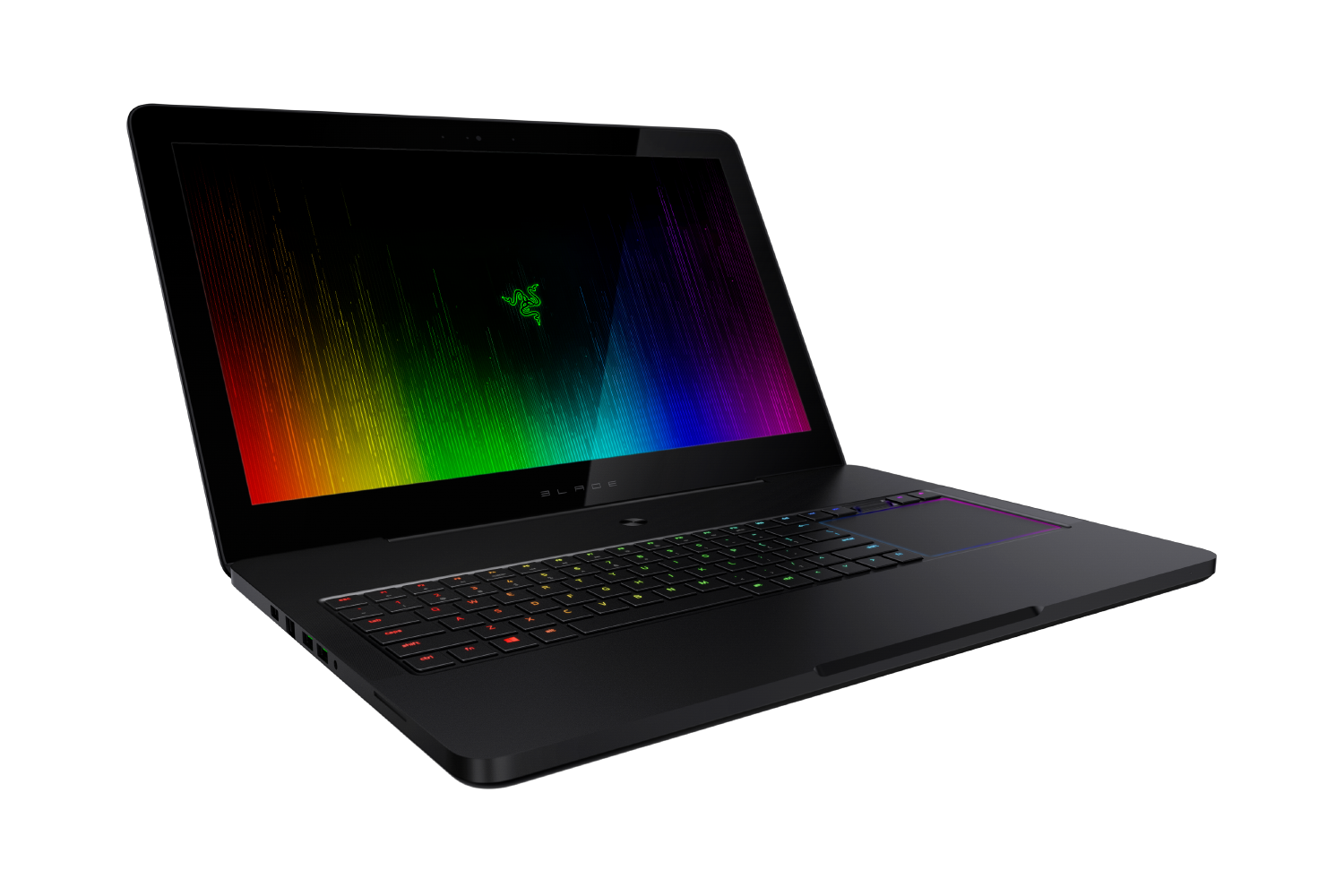
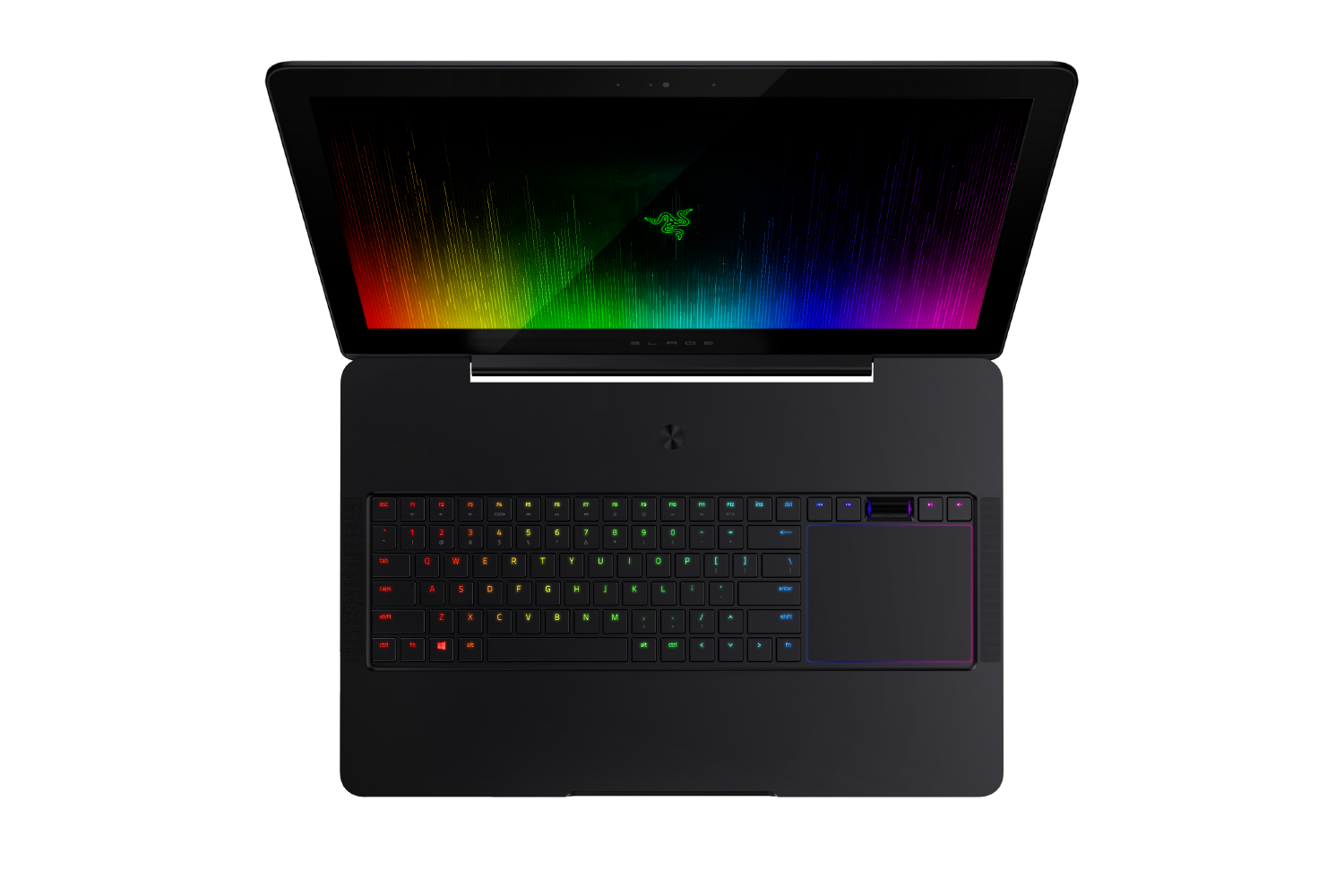
If you want hardcore gaming performance, but need it in a system that's portable, if not completely lightweight, then Razer's new Blade Pro could be just the ticket. Razer is calling it the "desktop in your laptop," and they the company has a point.

On the inside, the system packs a quad core Skylake processor, an 8GB Nvidia GeForce GTX 1080 GPU, 32GB RAM, up to 2TB of NVMe SSD storage in RAID 0, Thunderbolt 3, and a 4K G-Sync capable screen. That's a machine that isn't giving much up in performance to most desktop PCs, so already justifies Razer's strapline... but it's the next thing they did that really makes this a laptop desktop.
The Blade Pro doesn't have the usual membrane keys found in laptops. It has a full mechanical keyboard, with switches—not rubber domes—beneath each key. OK, it's still a laptop, so it's a low profile mechanical keyboard with reduced key travel and chiclet style buttons. But it's a mechanical keyboard nonetheless (Razer also has a similar mechanical mechanism for its iPad Pro keyboard). And of course, being a Razer laptop, it's not just a mechanical keyboard. It's a mechanical keyboard that can be lit up with any color of the rainbow. Alongside it sits a giant touchpad.
All this hardware is packed into a unit that's actually surprisingly portable. It weighs 7.8lbs, and is about 0.9 inches thick. I remember a time not so long ago when regular laptops were fatter (and heavier) than that. My current mechanical keyboard is more than an inch deep, and the closest it has to a powerhouse computer is a USB hub!.


There is of course the small matter of the price; it's a little eye-watering. With 512GB of storage, it starts at $3,699/€4,199/£3,499.

Listing image by Razer
Read More »

Apple Watch Nike+ Soon To Hit The Market

Apple will debut a Nike-branded Apple Watch next Friday in a bid to highlight the device’s fitness creds.

Apple Watch Nike+


Apple is mostly making a fashion and branding statement with Apple Watch Nike+ via a special band and color schemes. The core features of the special version of the watch are the same as other Series 2 models, including a built-in GPS to track your pace, distance, and route.

But independent GPS tracking is a critical fitness upgrade for a product co-branded with Nike, because it gives you the option to untether your iPhone when exercising. That is not possible on the first-gen watch, which needs the iPhone’s GPS.

Apple also needs to do this to match the competition. Fitbit, the wearables’ market leader, offers the Fitbit Surge with built-in GPS at a price considerably lower than the Apple Watch Series 2. Though the Surge is not a full-featured watch like Apple’s, it starts at $250, compared to the Nike version of the Apple Watch 2 that has a starting price of $369.

Basic wearables, like most of FitBit’s offerings, are still “a clear value proposition for end-users,” Ramon Llamas, an analyst at IDC, said in a statement when the company announced second-quarter global wearable shipment tallies last month.  
 
That said, the Apple Watch Nike+, via its exclusive watch faces, can typically show off more metrics on the same screen -- including distance, duration, heart rate, and pace -- than a basic Fitbit wearable. 
 
Features exclusive to the Apple Watch Nike+

There are nice-to-have add-ons you get with Apple Watch Nike+. First and foremost is the band, which is probably its signature feature. Apple calls it light, flexible, and breathable, with perforations that reduce weight and boost ventilation. And the Nike Volt lime color scheme (what Nike calls “bright green-yellow”) matches the groundbreaking Nike FuelBand.

The Nike+ version also comes with an exclusive Nike watch face, which adds the iconic Volt color in digital and analog styles.

In the app department, there’s Nike+ Run Club. While you’re tracking your runs, you can get coaching and workouts created by Nike “master trainers.” And, like other Watch models, you can connect with friends for encouragement. For example, you can receive reminders triggered by your friends’ shared activity and share run results on leaderboards.

Like all Watch 2 models, the Nike+ version can be used for shallow-water activities like swimming in a pool or ocean. The Apple Watch Series 2 has a water resistance rating of up to 50 meters under water, but it is not recommended for scuba diving or waterskiing, or other activities involving “high-velocity” water.

And, like all Watch 2 models, it packs a faster processor (dual processing cores) and brighter display than the first-generation Watch.

The Apple Watch Nike+ also comes in Space Gray Aluminum Case with Black/Cool Gray Nike Sport Band and a Silver Aluminum Case with Flat Silver/White or Flat Silver/Volt Nike Sport Band.


Read More »

All Tesla cars built from today on have all hardware needed for full self-driving


 Elon Musk revealed the Model 3 in March, revealing details of the $35,000 base model including a sub-six second 0-60 time and a minimum 215 mile range. The basic picture of the Model 3 inspired a pre-order frenzy unlike anything seen previously in the car world, but now Musk has dropped what he referred to earlier as Part 2 of the Model 3 unveiling after a lengthy pause, as promised, and it’s a doozy.

Musk announced that all Tesla cars being produced as of today, including the Model 3, will have everything they need onboard to achieve full Level 5 self-driving in the future. The news means that every Tesla vehicle, including the Model S and X as well as Model 3 cars made after today will eventually be able to achieve full autonomous driving, with what Tesla refers to as “a safety level substantially greater than that of a human driver” via nothing more than a software update at some point in the future.

The hardware required to make this possible includes a sensor loadout complete with eight surround optical cameras, which can see up to 250 meters out from the vehicle on all sides, and a dozen ultrasonic sensors to assist the optical system. These are capable of twice the range of previous hardware, and can detect both “hard and soft objects” according to the company. Also included is the radar hardware that provides forward-facing detection of hazards even through potentially obfuscating conditions.

The biggest change might be the new onboard computer that provides over 40 times the processing power of the existing Tesla hardware, which actually runs the in-house neural net the car maker has developed in order to handle processing of data inbound from the vision, sonar and radar systems. Musk said on call discussing the most recent update to the existing driver assistance Autopilot software that it basically stretched computing power to the limit, which is why the upgraded CPU is required for full Level 5 autonomy. The new GPU is the Nvidia Titan, Musk said on the call, though it was a “tight call” between Nvidia and AMD.

The validation required for full autonomy will still take some more time, but Musk said on a call that it’s actually already looking like it’ll be at least two times as safe as human driving based on existing testing.

While it’s being developed, the self-driving system will operate in the background in “shadow mode,” essentially working virtually behind the scenes in order to demonstrate where it would’ve been able to avoid accidents that a person driving could not.

While the hardware will be included in all Tesla cars made from now on, which includes the Model 3, it will be an $8,000 add-on for vehicles to enable the software.

The reason for building in full autonomy capability across the lineup, according to Musk, is entirely to increase driving safety and reduce traffic-related accidents. Musk spoke passionately about this aim going so far as to admonish broad media coverage of Autopilot-related accidents, while the ongoing and persistent issue of human-fault car deaths receives far less attention from press.

In fact, the National Highway Traffic Safety Administration reported sharp increases in traffic deaths in both 2015 and 2016, and asked for help parsing the data to determine the causes of the rise. And when the Department of Transportation released its federal guidelines for autonomous driving technology, it also strongly indicated that the government believes autonomy in vehicles will ultimately lead to safer roads.

Musk said in a conference call in August regarding Tesla’s advancements in creating a car with Level 4 autonomous capability that “what we’ve got will blow people’s minds, it blows my mind,” and added that “it’ll come sooner than people think.” He’s certainly delivered with today’s announcement.


Read More »

Nintendo's Latest Gaming Revolution is Nintendo Switch For the Living Room and Beyond


 The first thing to know about the new Nintendo Switch home gaming system: it’s really fun to play. With great graphics, loads of game titles and incredible performance, the Nintendo Switch will provide people with many hours of engaging and interactive gaming entertainment.
\
But creating a device so fun required some serious engineering. The development encompassed 500 man-years of effort across every facet of creating a new gaming platform: algorithms, computer architecture, system design, system software, APIs, game engines and peripherals. They all had to be rethought and redesigned for Nintendo to deliver the best experience for gamers, whether they’re in the living room or on the move.

A Console Architecture for the Living Room and Beyond

Nintendo Switch is powered by the performance of the custom Tegra processor. The high-efficiency scalable processor includes an NVIDIA GPU based on the same architecture as the world’s top-performing GeForce gaming graphics cards.

The Nintendo Switch’s gaming experience is also supported by fully custom software, including a revamped physics engine, new libraries, advanced game tools and libraries. NVIDIA additionally created new gaming APIs to fully harness this performance. The newest API, NVN, was built specifically to bring lightweight, fast gaming to the masses.

Gameplay is further enhanced by hardware-accelerated video playback and custom software for audio effects and rendering.

We’ve optimized the full suite of hardware and software for gaming and mobile use cases. This includes custom operating system integration with the GPU to increase both performance and efficiency.


NVIDIA gaming technology is integrated into all aspects of the new Nintendo Switch home gaming system, which promises to deliver a great experience to gamers.

The Nintendo Switch will be available in March 2017. More information is available at  


Nintendo Switch is a trademark of Nintendo.


Read More »

first robotic surgical system with sense of touch invented by Deakin University


Deakin University in Melbourne has unveiled the HeroSurg robot, which gives surgeons, for the first time, the sense of touch while they perform surgery via a computer.

Unveiled on Wednesday at the Australasian Simulation Congress, the university claims HeroSurg to be a major breakthrough compared to current technology, which limits robotic surgery to the sense of sight.

Giving surgeons the added sense of touch through technology known as haptic feedback means laparoscopic or keyhole microsurgery will be safer and more accurate by reducing trauma and lowering the risk of blood loss and infection. 


HeroSurg is the world's first robot that provides surgeons the sense of touch (Deakin University) 

HeroSurg was developed in the laboratory at Deakin's Waurn Ponds campus in Geelong by engineers from Deakin and Harvard, along with professor Suren Krishnan, who in 2008 became the first Australian surgeon to use the da Vinci surgical system for ear, nose, and throat procedures. 

Krishnan, from the Royal Adelaide Hospital and an honorary professor at the Deakin Institute for Intelligent Systems Research and Innovation (IISRI), said HeroSurg's added sense of touch improves the ability of surgeons to distinguish between normal tissue and tissue affected by cancer. 

"The major drawback of the current system is the lack of tactile feedback," Krishnan said in a statement. "Tactile feedback allows a surgeon to differentiate between tissues and to 'feel' delicate tissues weakened by infection or inflammation and dissect them more carefully. Tactile feedback will allow us to use finer and more delicate sutures in microsurgery."

The project's lead researcher and haptics expert, Dr Mohsen Moradi Dalvand, said the haptic feedback allows for specific manoeuvres and diagnoses to be performed with greater confidence.


"HeroSurg's unique features, which allow it to overcome many of the limitations of existing robotic laparoscopic systems, include collision-avoidance capability, modularity, and automatic patient/bed adjustment," Dalvand said in a statement. 


"The automatic collision avoidance enables surgeons to operate with peace of mind and confidence that there will be no collision with instruments, the robot's arms, or the laparoscope with the patient."

Other HeroSurg features include high-resolution 3D images, an increased range of motion for the surgeon, and a more ergonomic workstation console.

HeroSurg workstation console. (Deakin University)

 
"HeroSurg will assist surgeons to perform demanding surgical procedures with comfort, accuracy, and safety by providing real-time collision avoidance for medical instruments, and stereo-endoscopic vision," Dalvand said.

IISRI director Saeid Nahavandi pointed out that HeroSurg could even be used remotely, meaning that surgeons could perform surgery thousands of kilometres away from the patient.

After laboratory testing in partnership with medical experts, the project is ready for human trials. Deakin University plans to bring the technology into the Australian health system over the next few years. 

A study last month by medical journal The Lancet found that robots are just as effective as human surgeons after a trial in the Royal Brisbane and Women's Hospital, which saw 308 men with localised prostate cancer randomly assigned to have either robotic surgery or open surgery.

"Surgery has long been the dominant approach for the treatment of localised prostate cancer, with many clinicians now recommending the robotic method to patients," said lead author Robert Gardiner, University of Queensland Centre for Clinical Research, in a statement. 

"Many clinicians claim the benefits of robotic technology lead to improved quality of life and oncological outcomes."

The patients who received surgery via robotics lost less blood during the procedure, had a shorter stay in the hospital, and reported better physical quality of life six weeks after the surgery.

Physical quality of life 12 weeks after the operation was similar between those operated on by humans and those by robots, with the long-term outcome yet to be reported.

Read More »